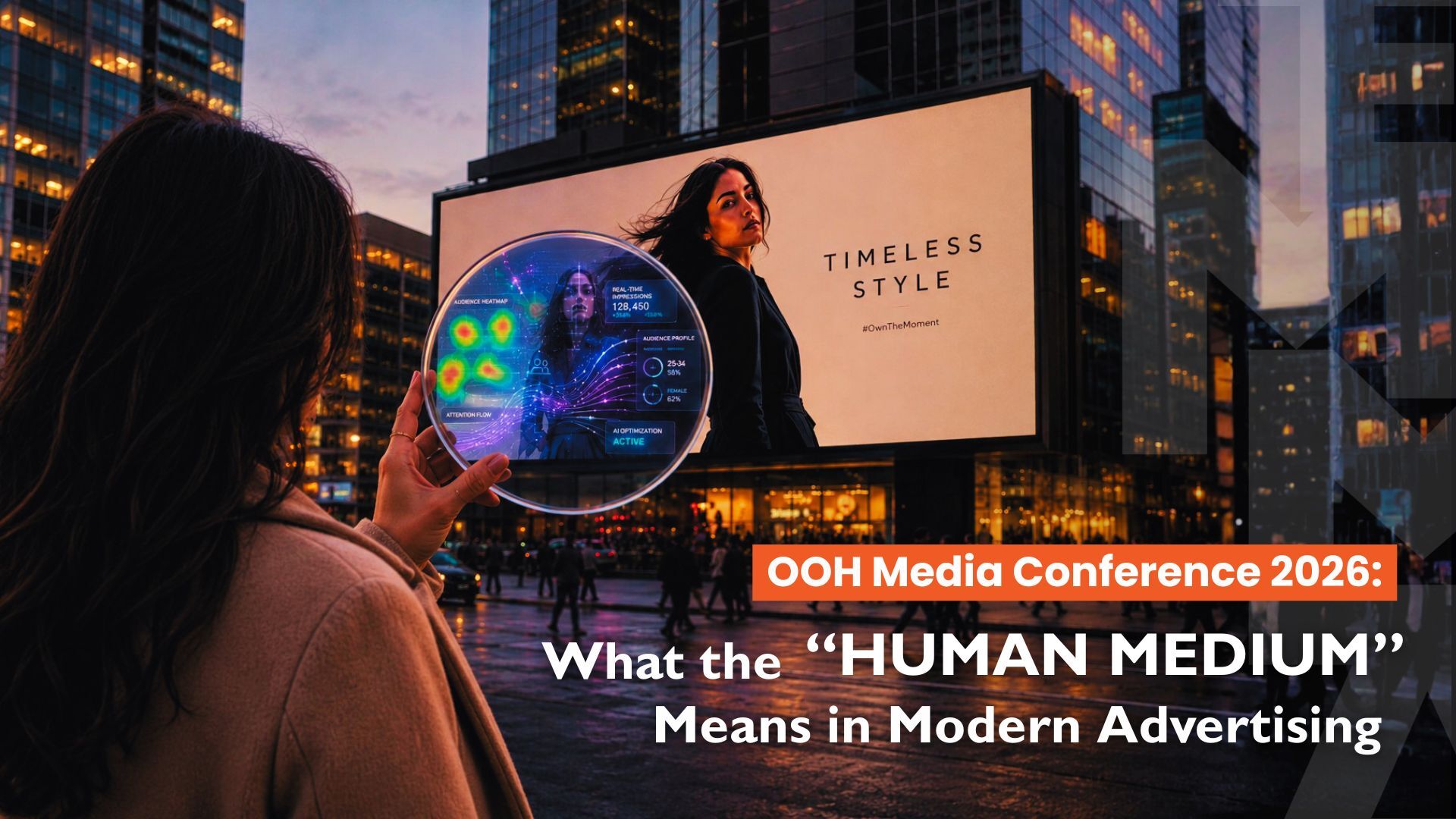


As the industry prepares for the OAAA OOH Media Conference 2026, one theme anchors the conversation: “The Human Medium.” It’s a familiar idea, but in 2026 it carries new weight. Out-of-Home has always been about presence and shared experience, yet it now operates within a media ecosystem increasingly shaped by automation, AI-led planning, and machine-driven decision-making.
This contrast defines the conversation this year. The question is no longer just why OOH works. It is whether it is built to compete in a system where machines decide what works.
The Rise of AI-Driven Media Planning in OOH
One of the most important shifts shaping OOH today is the rise of AI-driven planning. Media decisions are increasingly being generated, optimized, and executed by systems that evaluate channels based on data, predictability, and performance.
This is the reality of agentic buying. In this environment, OOH faces a different kind of challenge. Its effectiveness is not in doubt, but its structure is. A medium built on fragmented inventory and manual workflows risks being overlooked in systems that prioritise standardisation and scalability.
The implication is clear. OOH must evolve from being visible to audiences to being legible to machines.
Turning Measurement into Media Value
As OOH adapts to this shift, another narrative is being redefined. Measurement is no longer the barrier it once was. Capabilities have evolved, and the medium is increasingly able to demonstrate its influence across the consumer journey. The real shift is in how that impact is evaluated.
OOH is now being measured alongside channels like Connected TV (CTV), retail media, and digital platforms, not in isolation but as part of a unified media strategy. Its value lies in how it contributes to incremental reach, strengthens cross-channel impact, and drives measurable outcomes. This repositioning moves OOH beyond awareness into a more accountable, performance-aligned role within the modern media mix.
Why the “Human Medium” Still Matters in Modern Advertising
Amid these structural and technological shifts, OOH’s core strength remains unchanged. It operates in the real world, where culture happens and attention is shared. In a fragmented digital landscape, this becomes a strategic advantage.
OOH is one of the few channels that can create collective, unskippable moments at scale. It delivers presence, not just impressions. And as media becomes more personalised and automated, this shared visibility becomes even more valuable. More than just a positioning, the “Human Medium” is what continues to set OOH apart in an increasingly machine-led ecosystem.
What Comes Next for OOH
What the OAAA OOH Media Conference 2026 ultimately signals is a clear direction for the industry. OOH must balance its human strength with a more intelligent, integrated approach to media.This means evolving into a medium that is not just seen, but understood. Not just impactful, but accountable. Not just present, but connected to outcomes.
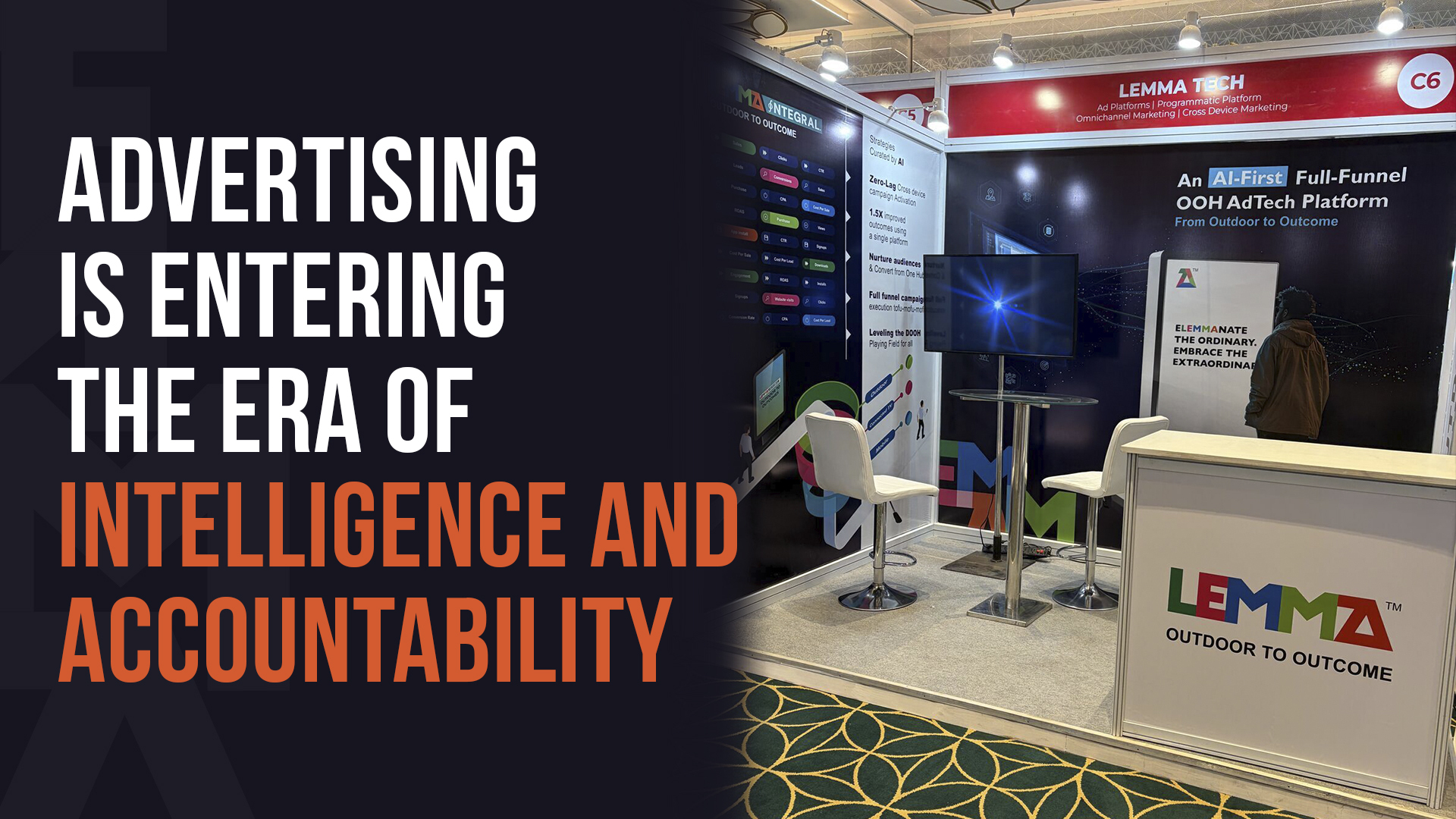
At Lemma, this is not a shift we are reacting to, it’s one we have been building toward. From early investments in programmatic DOOH to enabling cross-screen orchestration, our focus has consistently been on making OOH more connected, measurable, and ready for the way modern media operates. With solutions like Lemma Integral, we are extending that vision further bridging physical and digital touchpoints to transform OOH from a moment of exposure into a driver of action within a unified, full-funnel media journey.
The future of OOH will not be defined by whether it works. It will be defined by whether it is built for the way media now works.