


India’s modern outdoor advertising laws are designed to professionalize the medium. By introducing clear structure and safety standards, frameworks from local municipal bodies and national guidelines ensure that digital screens coexist beautifully with our cities. For premium brands, this creates a clean, elite advertising environment free from chaotic visual clutter.
1. Thriving in High-Value Digital Zones
Indian regulations actively encourage the growth of smart digital infrastructure by unlocking the country’s most valuable real estate. Local bodies are opening up premium, high-footfall environments that offer maximum brand visibility to uncluttered, captive audiences:
- Premium Retail Hubs: Shopping malls, modern multiplexes, and commercial centers are designated as prime zones for immersive digital experiences.
- Smart Transit Networks: Airports, modern metro lines, and bus queue shelters allow brands to connect dynamically with daily commuters.
- Corporate Spaces: Approved business premises, commercial office blocks, and retail fuel stations offer a sophisticated setting for high-impact displays.
2. Smart Illuminance and Brightness Ratios
India’s technical standard codes (aligned with the Indian Roads Congress guidelines) are built to ensure your creative assets look stunning without causing eye strain to the public:
- Automated Environmental Harmony: To blend seamlessly with changing daylight, digital billboard networks must feature built-in Light-Dependent Resistors (LDRs) or automatic sensors. This technology automatically fine-tunes your ad’s brightness to match the natural ambient light, making your graphics pop perfectly at noon and stay comfortably readable at dusk. Some allow automated adjustments in brightness and clarity remotely.
- Seamless Transitions: Regulations mandate smooth, gradual adjustments between ad loops, steering networks away from rapid, erratic flashes. This encourages elegant animation paths that draw the eye naturally and keep viewers hooked without distracting drivers.
3. Nurturing Responsible and Trusted Content
- The ASCI Shield of Trust: Following the self-regulation code of the Advertising Standards Council of India (ASCI) keeps your brand aligned with trusted consumer values. By filtering out misleading or offensive messaging, the law preserves a premium, highly credible advertising space for legitimate businesses.
- Optimized Night Curfews: Several major Indian cities implement a nightly curfew , allowing screens to take a break or pivot cleanly to non-illuminated public messages. This builds great civic goodwill and ensures public energy is conserved.
- Clear Driving Paths: Ensuring that ad layouts do not mimic official traffic symbols (such as actual “STOP” signs or confusing Red/Amber/Green graphic patterns) means your campaign helps keep Indian roads safe while maintaining its unique brand identity.
4. Streamlined Law Enforcement Clearances (for custom installations)
Acquiring the necessary structural and traffic permissions gives your campaign a stamp of legitimacy, ensuring your brand stands tall on public streets with complete official backing:
- The Traffic Police NOC: By collaborating with traffic departments, media networks guarantee their screens are perfectly placed. This ensures displays maintain excellent visibility without ever obstructing official road signage or signal lines.
- Structural Safety Assurance: Local municipal bodies require all digital setups to be verified by a registered structural engineer. This gives advertisers peace of mind that their high-tech screen installations are built to withstand heavy monsoons and harsh summer winds.
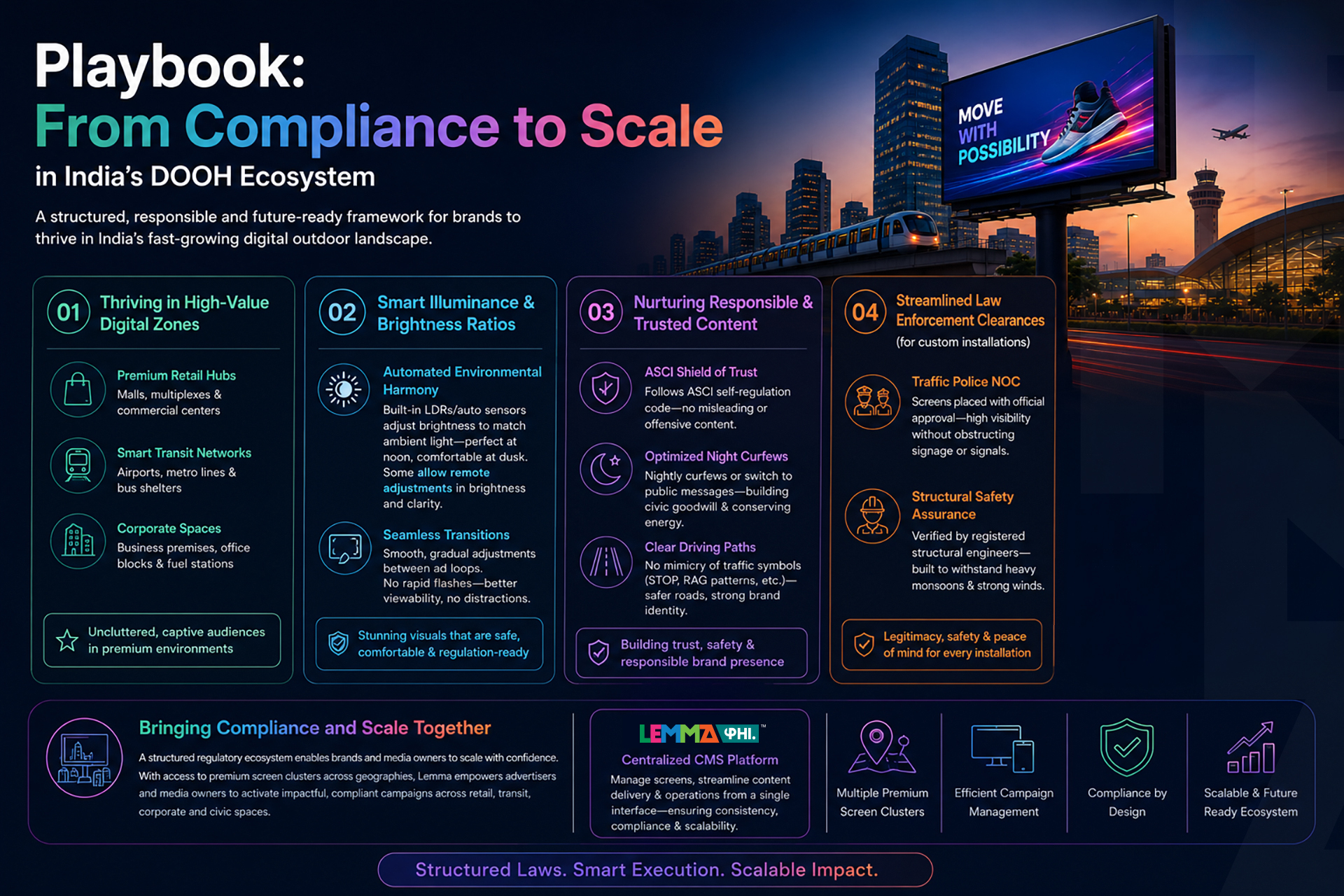
Bringing Compliance and Scale Together
As India’s digital outdoor ecosystem becomes more structured, managing campaigns across multiple locations requires more than just screen access. Brands and media owners need solutions that simplify operations while ensuring consistency across different environments and regulatory frameworks. With access to multiple premium screen clusters across geographies, Lemma enables advertisers and media owners to activate campaigns at scale across retail spaces, transit networks, and business districts.
Supporting this ecosystem is Lemma Phi, Lemma’s centralized CMS platform designed to help media owners efficiently manage screen networks from a single interface. By streamlining content delivery and operational workflows, it helps ensure campaigns run smoothly while supporting a more scalable and organized digital outdoor ecosystem.